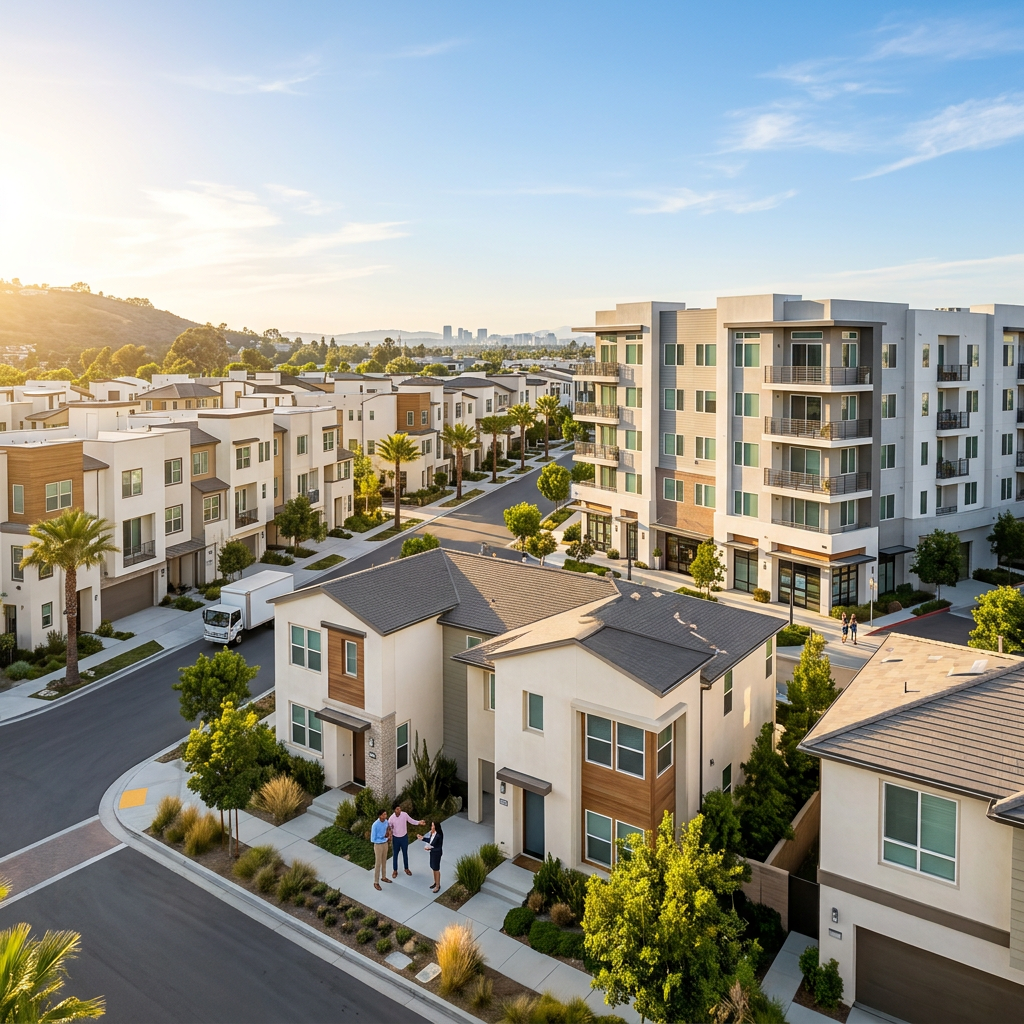
The Changing Guard: From Wall Street to Main Street
As we enter the second quarter of 2026, the California real estate landscape is witnessing a structural shift that few predicted two years ago. For much of the early 2020s, institutional investors—large-scale REITs and private equity firms—dominated the single-family rental (SFR) market. However, recent data from the National Association of Realtors (NAR) and localized MLS reports indicate a significant cooling of institutional appetite within the Golden State. In Q1 2026, institutional purchases of single-family homes in California dropped by 18% year-over-year, hitting their lowest level since 2016.
This retreat is not a sign of a failing market, but rather a strategic realignment. Increased regulatory scrutiny, including the 2025 updates to the California Tenant Protection Act and a rise in localized 'just cause' eviction ordinances, has compressed the high-margin yields that institutional models require. For the private investor and the small-scale syndicator, this cooling of 'big money' competition represents the most significant entry window in a decade.
The 'Orphan Portfolio' Opportunity
One of the most actionable trends in 2026 is the emergence of 'orphan portfolios.' As large funds seek to rebalance their national holdings away from high-regulation states, many are offloading blocks of 5 to 20 properties. According to CBRE’s 2026 California Investment Outlook, these portfolios are often sold at a 5-7% discount compared to individual retail sales to facilitate rapid liquidation.
Savvy local investors are filling this vacuum. Unlike institutional giants that rely on automated, statewide management algorithms, local syndicators are leveraging 'hyper-local' knowledge to manage properties more efficiently. By focusing on specific school districts or proximity to the burgeoning 'Biotech Coast' (the San Diego-to-Irvine corridor), private owners are maintaining occupancy rates 4% higher than the statewide institutional average.
Economic Resilience and Rent Growth
Despite broader national concerns, California’s economic engine remains a primary driver for investment. The California Department of Finance recently reported a 2.1% growth in professional and technical services jobs, particularly in the AI-integration sectors of the Silicon Valley and Los Angeles Basin. This high-income job growth continues to put upward pressure on rents, even as the pace of home price appreciation stabilizes.
Current data suggests that while the 'supply ceiling' is real, the demand for high-quality rental housing remains unsatisfied. For an investor, this means that the focus has shifted from speculative appreciation to sustainable cash flow—a 'yield-first' mentality that favors the disciplined private buyer over the growth-hungry institution.
Practical Takeaways for the 2026 Investor
- Target Institutional Liquidation: Monitor commercial brokerage listings for bulk SFR portfolios. Large funds are often willing to trade price for speed when exiting specific California submarkets.
- Leverage the 'Local' Advantage: Use specialized property management that offers high-touch tenant relations. In a strict regulatory environment, the relationship-based management style of private owners reduces legal friction and turnover costs.
- Focus on High-Income Renters: Align acquisitions with the 2026 job growth sectors. Areas surrounding the newly expanded biotech hubs and satellite aerospace facilities are seeing the most consistent rent escalations.
- Explore Fractional Syndication: For those priced out of individual 2026 valuations, the rise of regulated private syndicates allows investors to pool capital to acquire the very portfolios being vacated by institutional players.
Conclusion
The 2026 California market is defined by a transition of power. As the institutional 'gold rush' fades, the market is returning to its roots: a landscape where local expertise, operational efficiency, and a deep understanding of California’s unique regulatory environment are the primary keys to success. For those ready to step into the space vacated by Wall Street, the Golden State still offers unparalleled long-term value.