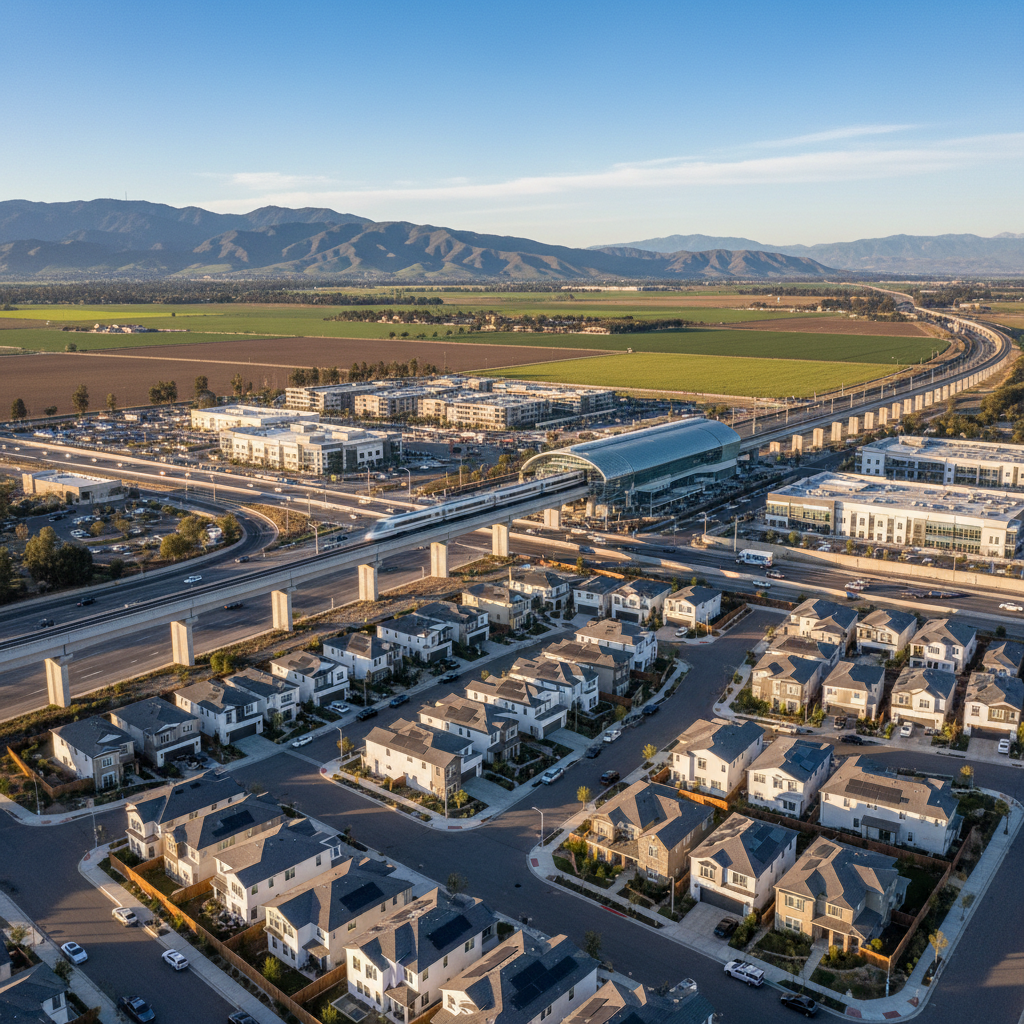
The Rise of the California Super-Commuter
As of late March 2026, the California real estate narrative is shifting away from the coastal core and toward the geographic heart of the state. While Los Angeles and San Francisco see stabilized growth, the Central Valley—specifically the corridor spanning from Stockton to Fresno—is experiencing a price surge driven by the convergence of high-speed rail progress and expanded regional transit links.
The Infrastructure Catalyst
The primary driver for this 2026 spring surge is the operational expansion of the Altamont Corridor Express (ACE) and the completion of key high-speed rail testing segments. According to data from the California Association of Realtors (CAR), median home prices in Merced and Stanislaus counties have jumped by 11.4% year-over-year, significantly outpacing the state average of 4.2%.
Investors and home buyers are no longer viewing these regions as agricultural outposts, but as viable 'satellite suburbs' for the Silicon Valley and Bay Area workforces. With the 'hybrid work' model now firmly entrenched in corporate California, the prospect of a 90-minute high-tech rail commute twice a week has made the Central Valley’s $550,000 median price point an irresistible alternative to San Jose’s $1.6 million baseline.
Data-Backed Market Shifts
The U.S. Census Bureau’s recent migration data highlights a distinct trend: for the first time since 2020, domestic migration into the Central Valley from the San Francisco Peninsula has increased for three consecutive quarters. This influx of high-earning professionals is creating a 'price floor' that is rapidly elevating local valuations.
- Inventory Tightness: Active listings in Fresno are down 15% compared to March 2025, as long-term residents hold onto low-rate mortgages while demand from commuters spikes.
- New Construction Focus: According to CBRE, 40% of all new multi-family permits issued in Q1 2026 were concentrated in 'Transit-Oriented Development' (TOD) zones within two miles of rail stations.
Practical Takeaways for Stakeholders
For Home Buyers
Potential buyers should look beyond the immediate station vicinities. Neighborhoods within a 15-minute drive of proposed rail hubs offer the best balance of appreciation potential and current affordability. Ensure you are pre-approved for 'commuter-friendly' loan products that account for the unique appraisal challenges in rapidly transitioning markets.
For Investors
The 'Station Zone' strategy is currently the highest-yield play in California. Focus on 'missing middle' housing—duplexes and triplexes—in downtown Merced and Stockton. These areas are seeing the highest rental growth (8.5% YoY) as younger professionals seek urban-lite amenities near transit hubs.
For Sellers
If you own property in the Central Valley, the market is currently peaking. Marketing your home specifically to Bay Area or LA-based remote workers—emphasizing home office space and proximity to transit—can command a 5-10% premium over local-market comps.
The Long-Term Outlook
As California continues to struggle with housing totals in coastal zones, the state's investment in transit infrastructure is effectively expanding the habitable boundaries of its major economic engines. The Central Valley is no longer just the state's breadbasket; in 2026, it has become the pressure valve for the California housing crisis.


