The Evolution of the Eco-Suburb
As California enters the second half of the decade, the narrative of suburban sprawl is being rewritten in the Santa Clarita Valley. Specifically, the neighborhood of Valencia—and its massive expansion via the FivePoint Valencia project—has emerged as the 2026 benchmark for sustainable, large-scale residential development. While previous years focused on urban infill, Valencia represents a successful pivot toward 'Net-Zero' living without sacrificing the amenities of a master-planned community.
Data-Driven Sustainability
According to 2025 year-end data from the California Energy Commission and local MLS reports, homes in Valencia’s newest phases are performing 30% more efficiently than standard new builds from just five years ago. Key features driving this performance include:
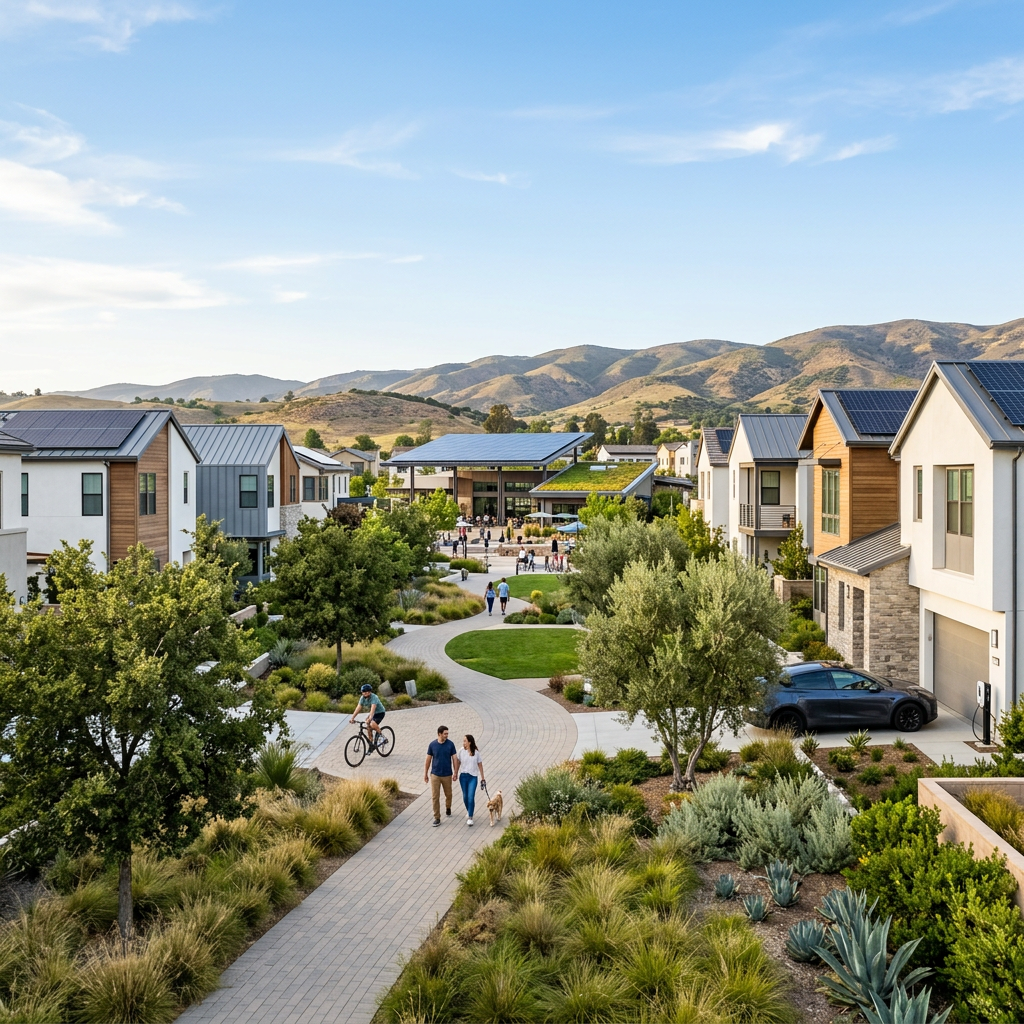
- Solar + Storage: Nearly every new rooftop is equipped with high-capacity photovoltaic systems paired with integrated battery storage, a response to the grid reliability concerns of the mid-2020s.
- EV Infrastructure: With California's 2035 mandate approaching, Valencia has standardized Level 2 charging in all residential garages and installed ultra-fast public hubs at community centers.
- Water Conservation: Advanced greywater recycling systems for community landscaping have reduced per-capita water usage by 25% compared to older Valencia tracts.
Connectivity Beyond the Commute
Valencia’s appeal has historically been its 'Paseo' system—over 30 miles of interconnected raised walkways. In 2026, this network has evolved into a multimodal artery for micro-mobility. Residents increasingly utilize e-bikes and scooters to navigate between the Westfield Valencia Town Center and the various 'villages,' significantly reducing internal vehicle trips.
For the regional commute, the proximity to the Santa Clarita Metrolink stations provides a vital rail link to Union Station in Los Angeles. While the I-5 remains the primary vehicular vein, the 2026 completion of the 'smart corridor' upgrades has improved flow through AI-managed traffic signaling, a project funded by the SCV Economic Development Corporation.
Educational Excellence and Value
The neighborhood remains a magnet for families due to the William S. Hart Union High School District. Schools like West Ranch and Valencia High consistently rank in the top 5% of California public institutions. This educational floor provides a 'scarcity premium' for the area; even during the interest rate fluctuations of 2024-2025, property values in Valencia remained 12% more resilient than the broader Los Angeles County average.
Investor and Buyer Takeaways
For those looking to enter the Santa Clarita market in 2026, the strategy should focus on the following:
- The 'Net-Zero' Premium: Buyers should prioritize homes with existing battery storage and high-efficiency ratings, as these properties are fetching a 7-10% resale premium due to lower utility overhead.
- Inventory Outlook: With the continued build-out of the Newhall Ranch legacy lands, supply is more fluid here than in land-locked coastal pockets, offering better opportunities for 1031 exchange investors.
- Long-term Growth: The expansion of the tech and film production sectors in Santa Clarita (the 'Hollywood North' effect) continues to bolster local employment, ensuring a steady pool of high-income renters.
Valencia has successfully transitioned from a 20th-century commuter town to a 21st-century model of self-sustaining urbanism. It proves that the California dream—complete with open space and top-tier schools—is compatible with the urgent demands of climate-conscious development.