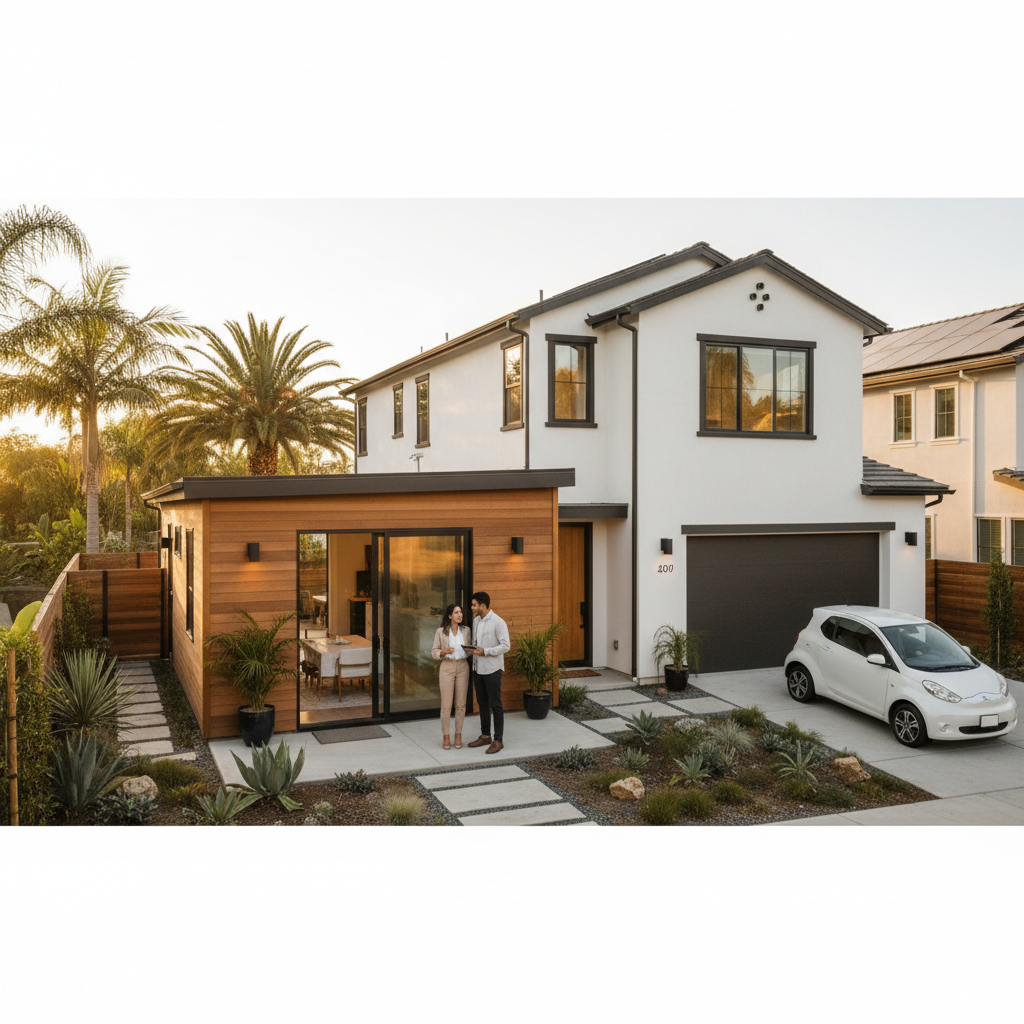
The 2026 Math: Why ADU Potential is the New Priority
In the spring of 2026, California home buyers face a unique set of variables: mortgage rates that have stabilized at a 'new normal' of 6.2%, and a median home price that remains resilient due to a chronic lack of inventory. To navigate this, the most successful buyers are no longer just looking at the primary residence; they are evaluating a property’s capacity for an Accessory Dwelling Unit (ADU) to act as a mortgage-offset or a wealth-building tool.
According to the California Department of Housing and Community Development (HCD), ADU permits now account for nearly 22% of all housing starts statewide. For the 2026 buyer, identifying a property with 'ADU-readiness' is the most practical path to affordability in a high-equity environment.
The Regulatory Edge: AB 1033 and 'Condo-ization'
A critical shift for 2026 is the wider adoption of AB 1033. This legislation allows local municipalities to permit the separate sale of ADUs as condominiums. While not yet universal, major hubs in Los Angeles, the Bay Area, and San Diego have begun implementing these ordinances. For a buyer, this means the ADU you build today could be sold off separately tomorrow, offering an exit strategy or a massive capital infusion that was impossible five years ago.
The 2026 'ADU-Ready' Checklist
When touring California homes, buyers must look beyond cosmetic finishes and evaluate the technical feasibility of the lot. Use this checklist to identify high-potential properties:
- Electrical Service Capacity: Modern ADUs require significant power. Check if the main panel is 200-amp. If it’s an older 60-amp or 100-amp service, factor in a $3,500–$5,000 upgrade cost into your offer.
- Sewer Lateral Accessibility: Locate the cleanout. If the ADU must be built behind the main house, the ease of connecting to the existing sewer line can save or cost you $15,000 in trenching and plumbing.
- Setback Compliance: While state law has relaxed setbacks (often to 4 feet for side and rear), check for overhead power lines or protected trees (like Coastal Live Oaks) that can trigger expensive 'No-Build' zones.
- The JADU Option: Look for homes with attached garages or large primary suites with exterior access. These can be converted into Junior ADUs (JADUs) for significantly less capital than a detached build.
Financing the Vision: The 2026 Landscape
One of the biggest hurdles in 2026 remains the cost of construction, which averages between $375 and $525 per square foot in California. To combat this, buyers should look for specialized financing products:
- FHA 203(k) Limited: Ideal for JADU conversions, allowing you to wrap up to $35,000 in renovation costs into your primary mortgage.
- Construction-to-Permanent Loans: Some California lenders now offer 'all-in-one' products that finance the purchase of the home and the construction of the ADU simultaneously, using the 'as-completed' appraised value.
- CalHFA ADU Grant 2.0: Check for the availability of state-backed grants that periodically reopen to assist low-to-moderate-income buyers with pre-development costs like architecture and permits.
Practical Takeaways for Buyers
- Run a Dual Pro-Forma: When calculating your monthly payment, run two sets of numbers: one for the base mortgage and one reflecting the potential rental income of a 1-bedroom ADU (currently averaging $1,800–$2,800 depending on the CA submarket).
- Verify Local Impact Fees: Remember that in California, ADUs under 750 square feet are exempt from local impact fees. Crossing the 750-sq-ft threshold can trigger $10,000–$25,000 in additional city charges.
- Hire an 'ADU-Fluent' Inspector: Standard home inspections often ignore the lot’s utility capacity for expansion. Ensure your inspector evaluates the main panel and site drainage specifically for future buildability.
By shifting the focus from 'move-in ready' to 'build-ready,' California buyers in 2026 can secure properties that do more than provide shelter—they provide a built-in hedge against the state's high cost of living.


