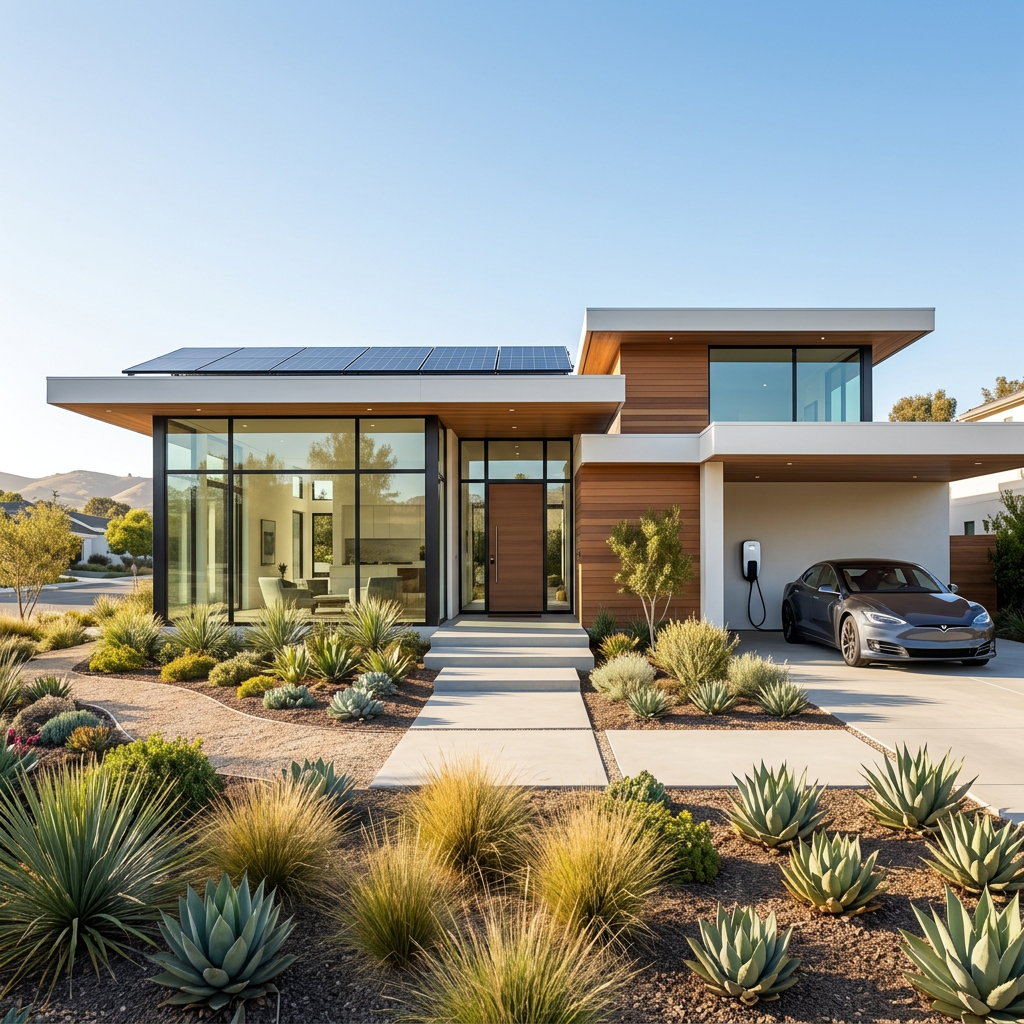
The Rise of Green Equity in the Golden State
As of March 2026, the California real estate market has reached a critical inflection point. While interest rates and inventory levels remain the primary topics of conversation, a new valuation metric has emerged: Green Equity. With the full implementation of the California Energy Commission’s (CEC) latest Building Energy Efficiency Standards and stricter local 'reach codes,' the efficiency of a home is no longer just a line item—it is a core component of its appraised value.
According to data from the California Association of Realtors (CAR), homes with certified high-efficiency systems and drought-resilient landscaping are currently commanding a 4.2% price premium over non-compliant properties in the same zip codes. For the 2026 buyer, a practical guide to the market requires looking past the quartz countertops and into the mechanical heart of the home.
1. The Electrification Audit: Beyond the Standard Inspection
In 2026, many California municipalities have moved toward full-building electrification. When touring a property, buyers must assess the 'electrification readiness' of the home. Replacing a gas furnace or water heater with a heat pump system in a home that hasn't been pre-wired can cost between $12,000 and $20,000.
- Check the Panel: Ensure the electrical panel is at least 200 amps to support EV charging, heat pumps, and induction cooktops.
- Heat Pump Integration: Look for existing heat pump HVAC systems. Under current 2026 standards, these are the preferred technology for maintaining home value and reducing utility overhead.
- Solar + Storage: With NEM 3.0 fully matured, buyers should prioritize homes that include battery storage systems (like the Tesla Powerwall or LG Chem) to maximize the value of solar generation.
2. Navigating SB 606 and AB 1668 Compliance
Water conservation mandates are no longer theoretical. The state's 'Making Conservation a California Way of Life' framework (SB 606 and AB 1668) has significantly impacted residential water budgets. In 2026, excessive water use can lead to tiered surcharges that drastically increase the cost of homeownership.
Buyers should evaluate the property's 'Water Footprint':
- Drought-Linked Landscaping: High-water-use turf is a liability. Properties with hydro-zoned, California-native landscaping or high-quality permeable hardscaping are more resilient to future utility hikes.
- Greywater Readiness: Check if the home is plumbed for greywater diversion. This allows for the reuse of laundry or shower water for irrigation, a major asset for maintaining greenery during drought cycles.
3. The 'Home Energy Score' as a Negotiation Tool
Much like a Carfax report, the Home Energy Score (HES) or the California Home Energy Rating System (HERS) report is becoming a standard request in 2026 disclosures. If a seller cannot provide a recent energy audit, buyers should include one as a contingency.
Practical data shows that homes with a HERS Index score below 50 (indicating 50% more efficiency than a standard new home) see significantly lower days-on-market. If a home scores poorly, use the estimated cost of mandated energy upgrades to negotiate credits or a lower purchase price, as these upgrades are no longer 'optional' for future resale.
Practical Takeaways for 2026 California Buyers
To navigate this landscape successfully, buyers should integrate the following into their search strategy:
- Budget for 'Hidden' Retrofits: If buying an older home (pre-2010), set aside 1-2% of the purchase price specifically for energy efficiency retrofits that will be required by local ordinances upon the next sale.
- Consult a Green-Certified Agent: Work with Realtors who hold NAR’s Green Designation or have specific experience with California’s Title 24 compliance.
- Leverage Federal and State Rebates: Utilize the 2026-extended Inflation Reduction Act (IRA) credits alongside California’s 'TECH Clean California' incentives to offset the costs of any necessary electrification immediately after closing.
By focusing on energy and water resilience, California buyers in 2026 aren't just buying a place to live—they are making a strategic investment in a property that is built to withstand both the climate and the regulatory shifts of the coming decade.


