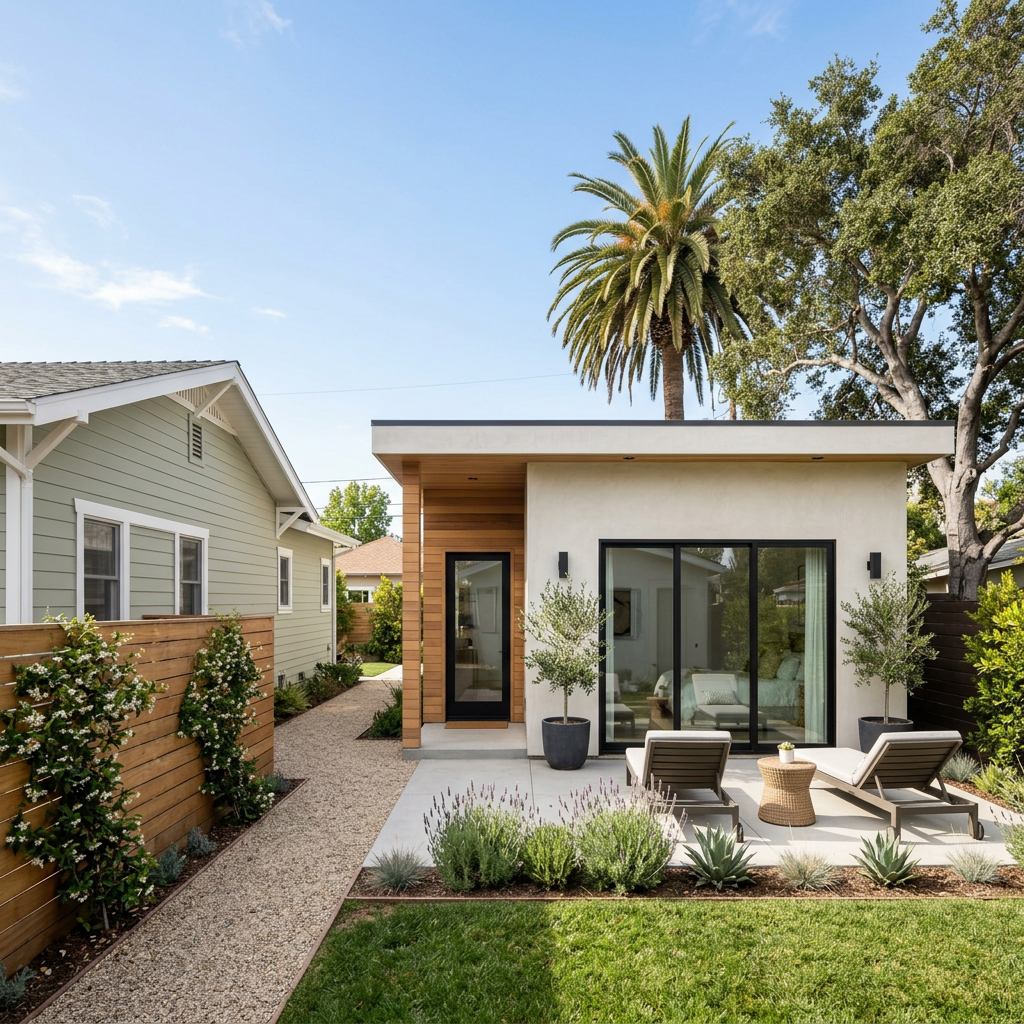
Beyond the Backyard Rental: A New Asset Class Emerges
For years, California’s Accessory Dwelling Unit (ADU) boom was defined by homeowners seeking passive rental income or multi-generational living solutions. However, as of March 2026, a significant shift is occurring in the state’s real estate landscape. Thanks to the broader municipal adoption of AB 1033, homeowners in participating cities like San Diego, San Jose, and Berkeley are no longer just landlords—they are becoming micro-developers.
AB 1033 allows local governments to permit homeowners to sell their ADUs separately from the primary residence as condominiums. This move is effectively 'condo-izing' the California backyard, providing a much-needed inventory of entry-level, detached housing in a market where the median home price continues to hover near record highs.
The Data Behind the ‘Detached Condo’ Surge
Data from the California Department of Housing and Community Development (HCD) indicates that ADU permit applications designed specifically for separate sale have increased by 22% in the first quarter of 2026 compared to the same period last year. According to local MLS data, these 'detached condos' are entering the market at price points significantly below traditional single-family homes.
- Market Entry Points: In the San Francisco Bay Area, while the median price for a traditional single-family home sits at $1.3 million, newly partitioned ADU condos are listing between $650,000 and $800,000.
- Inventory Contribution: In San Diego, ADU sales accounted for nearly 6% of all residential closings in February 2026, providing a critical buffer as traditional inventory remains constrained.
- Financing Evolution: Major lenders have finally streamlined the appraisal process for these split-parcel properties, with the California Housing Finance Agency (CalHFA) providing new guidance on secondary market liquidity for AB 1033 units.
The Regulatory Hurdle: Not All Cities Are Equal
While the state law enables this transition, it is not a blanket mandate. Each municipality must opt-in by passing local ordinances. Investors and homeowners should note that while Los Angeles has seen high ADU production, the city’s specific implementation of AB 1033 sales is still undergoing a pilot phase in select neighborhoods. Conversely, smaller hubs like Santa Cruz have moved rapidly to embrace the law to meet their Housing Element requirements.
Practical Takeaways for Market Participants
For Homeowners and Sellers:
- Liquidity vs. Cash Flow: Selling an ADU can provide a massive liquidity event to pay down a primary mortgage, but it permanently removes the rental income potential. Conduct a long-term Net Present Value (NPV) analysis before converting.
- HOA Requirements: Selling an ADU as a condo requires the creation of a Homeowners Association (HOA) to manage shared utilities and common areas (like driveways). Consult a real estate attorney early in the process.
For Buyers and Investors:
- Entry-Level Accessibility: These units represent a rare opportunity to own detached property in prime coastal markets at a fraction of the cost of a standard lot.
- Due Diligence: Ensure the ADU was built to residential code (Title 24) and that the condo conversion has been legally recorded with the county. Financing can still be more complex than a standard condo; seek pre-approval with lenders experienced in ADU-specific products.
As California continues to grapple with a chronic housing shortage, the transition of ADUs from 'granny flats' to 'starter homes' represents one of the most significant structural changes to property rights in recent state history. For the 2026 spring market, the detached condo is no longer a novelty—it is a cornerstone of the new California dream.


