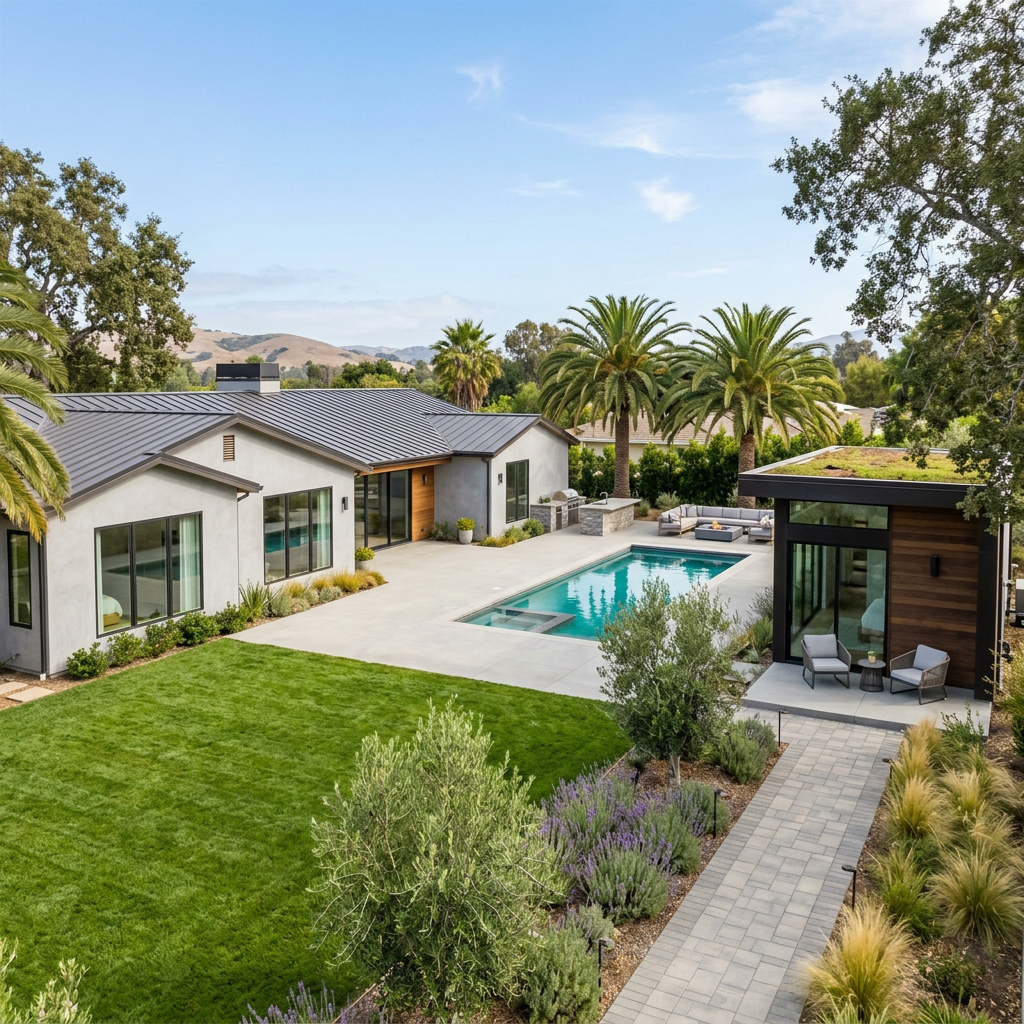
The 2026 Shift: Versatility as the New Luxury
As of March 2026, the California real estate landscape has moved beyond traditional single-family metrics. With housing inventory remaining tight and interest rates stabilizing after years of volatility, buyers are no longer just looking for square footage—they are looking for income potential and multi-generational flexibility. For sellers, the key to maximizing return on investment (ROI) now lies in how well a property can function as a 'compound.'
The ADU Multiplier Effect
Accessory Dwelling Units (ADUs) have become the crown jewel of California real estate. According to data from the California Department of Housing and Community Development, ADU permits now account for nearly 20% of all housing production in the state. In 2026, a permitted ADU can add anywhere from 15% to 35% to a property's appraised value, depending on the local market density.
However, simply having a 'granny flat' isn't enough. To maximize value, sellers must ensure their secondary units are fully compliant with recent legislation like AB 1033, which in some California municipalities allows ADUs to be sold separately as condominiums. Even if you aren't partitioning your lot, marketing the ADU as a turnkey rental or a 'work-from-home' sanctuary is essential.
Preparation: The Disclosure and Compliance Audit
California's disclosure laws remain the strictest in the nation. Before hitting the market, savvy sellers should perform a 'compliance audit.' This includes:
- Title 24 Verification: Ensure all energy-efficient upgrades, especially those made to ADUs or garage conversions, meet the latest California Energy Code standards.
- The Permit Trail: In a 2026 market, buyers are wary of 'unpermitted' improvements. Gather your Certificate of Occupancy for any additions. According to recent MLS data, homes with fully permitted auxiliary spaces sell 12% faster than those with 'bonus' rooms of questionable legality.
- Wildfire Preparedness: Compliance with Assembly Bill 38 (wildfire transition disclosures) is no longer optional for high-risk zones. Having a completed defensible space inspection on file before listing can prevent closing delays.
Marketing the 'Multi-Gen' Lifestyle
The National Association of Realtors (NAR) 2025 Home Buyer and Seller Generational Trends report highlighted that 15% of buyers purchased a multi-generational home. In California, that number is estimated to be closer to 22%. Your marketing strategy should target these specific demographics:
- Professional Staging: Stage the ADU or flex space as a high-end office or an independent living suite for aging parents, rather than just a storage area.
- Highlighting Infrastructure: In 2026, California buyers prioritize EV charging stations and solar-plus-battery storage systems. Highlight these as 'future-proof' features that mitigate rising utility costs.
- Virtual Compound Tours: Utilize 3D mapping that clearly shows the separation of living spaces, emphasizing privacy between the primary residence and secondary units.
Strategic Takeaways for Sellers
- Get a Pre-Listing Appraisal: For properties with ADUs or JADUs (Junior ADUs), a standard CMA (Comparative Market Analysis) may fall short. Hire an appraiser with specific experience in multi-unit residential properties.
- Focus on 'Separation of Grade': If your property allows, create separate entrances or distinct outdoor zones for each unit. Privacy is the primary driver of value in multi-generational layouts.
- Leverage Tax Portability: If you are over 55, remind yourself of Proposition 19 benefits, which allow you to transfer your property tax base to a new California home of any value, potentially saving thousands in annual carry costs on your next purchase.