The 'Island Effect': Why Alameda Defies Regional Volatility
As the broader Bay Area market navigates the post-2024 interest rate stabilization, Alameda—California’s premier 'Island City'—has emerged as a fortress of equity. While neighboring Oakland has faced inventory surges, Alameda’s constrained geography and strict historical preservation laws have created a 'scarcity premium' that continues to drive appreciation. According to MLS data from early 2026, the median sales price for single-family homes in Alameda has climbed 5.8% year-over-year, outperforming the regional average of 3.2%.
The Catalyst: Alameda Point and the $1 Billion Redevelopment
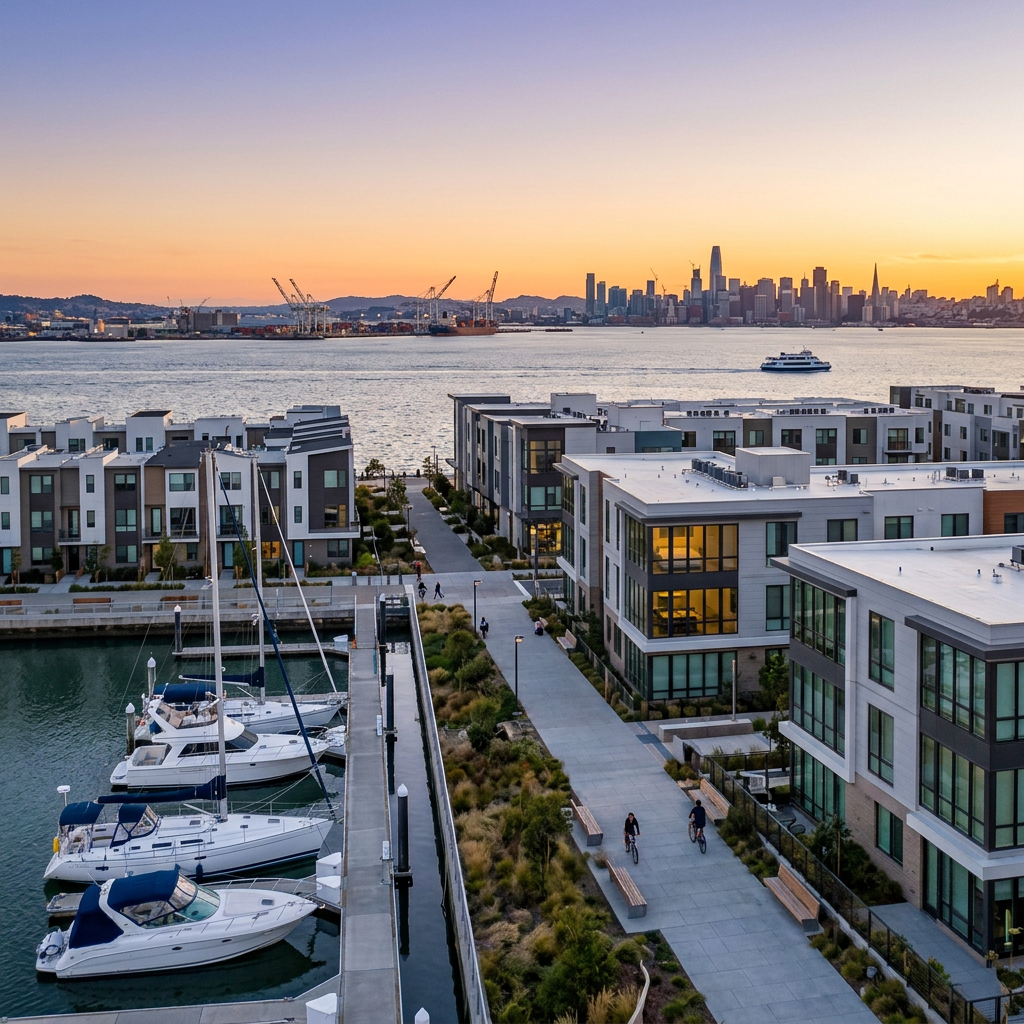
The primary driver of the island’s current real estate renaissance is Alameda Point. Formerly the Naval Air Station Alameda, this 68-acre waterfront site is undergoing a multi-billion dollar transformation into a mixed-use district. Unlike the suburban sprawl of the 1990s, this development focuses on high-density, transit-oriented living. For investors, the West End offers a unique entry point into new construction—a rarity on an island dominated by Victorian and Craftsman architecture. CBRE reports that the commercial components of Alameda Point, specifically the 'Spirits Alley' craft brewery and distillery row, have increased local foot traffic by 40% since 2023, signaling a maturing lifestyle destination.
Transportation: The 'Commuter’s Cheat Code'
In a region plagued by bridge traffic, Alameda’s ferry system is its greatest logistical asset. The Water Emergency Transportation Authority (WETA) has recently expanded service from the Seaplane Lagoon terminal, offering a 20-minute transit to San Francisco’s Ferry Building. This connectivity has shifted the demographic profile of the West End from local service workers to high-earning tech and finance professionals seeking a maritime lifestyle without the price tag of Sausalito or the density of Mission Bay.
Education and Community Stability
Alameda Unified School District (AUSD) remains a cornerstone of the island's value proposition. Schools like Maya Lin and Edison Elementary consistently rank in the top decile of California public schools (GreatSchools ratings of 8/10 or higher). Census Bureau data indicates that Alameda retains a 64% homeownership rate, significantly higher than the 38% seen in San Francisco, fostering a stable, community-centric environment that appeals to families and long-term holds.
Investor Takeaways: How to Navigate the 2026 Market
- Focus on the 'Gold Coast' for Preservation: High-net-worth buyers should target the central 'Gold Coast' for long-term value preservation in historic estates.
- The West End Pivot: Investors looking for appreciation should target 1940s-era bungalows in the West End, which are seeing the highest rental yield growth due to proximity to the new ferry terminal.
- Monitor the 'Estuary Infill': New townhome developments along the Park Street bridge are offering the highest cap rates for multi-unit investors as the city encourages infill density.
Alameda offers a rare combination of historical stability and aggressive redevelopment. For those priced out of the Peninsula but wary of urban core volatility, the Island City represents a balanced middle ground with a clear path to equity growth through the end of the decade.