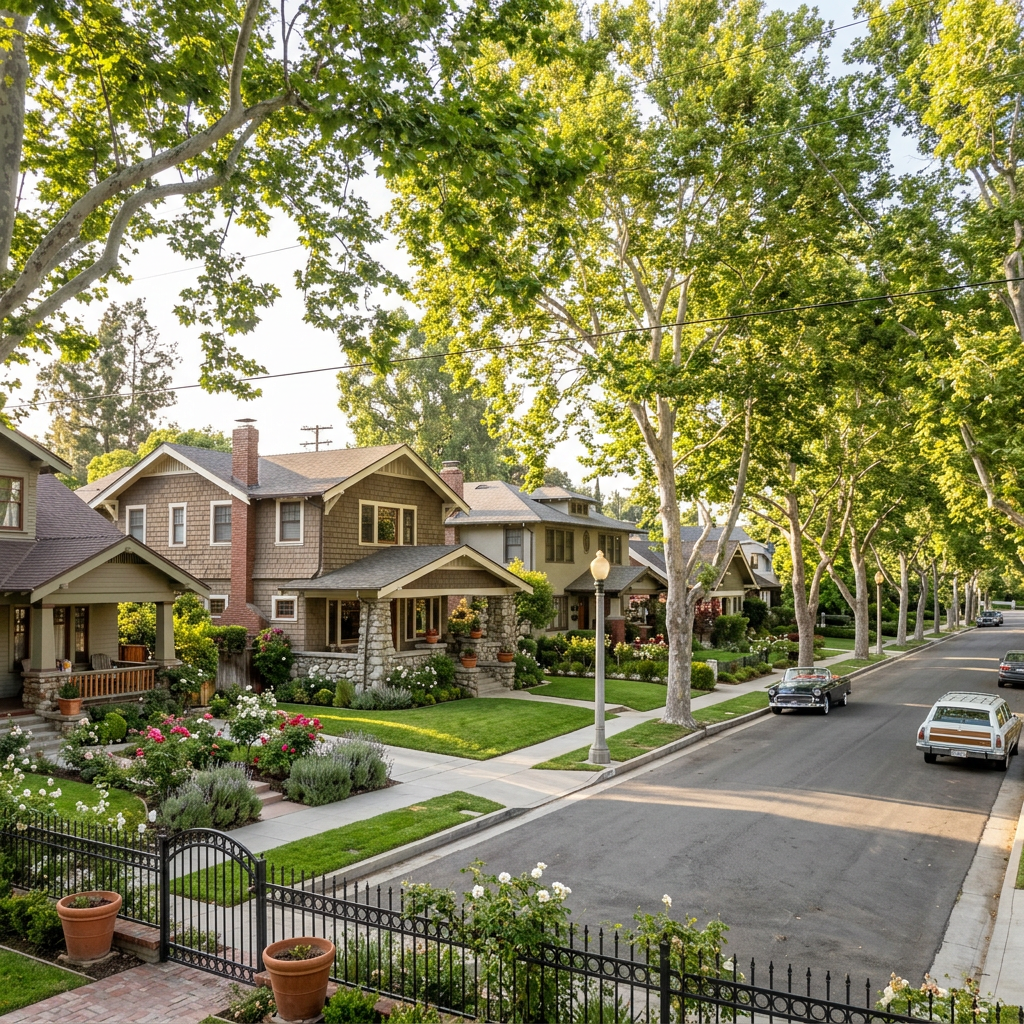
The Micro-Market Resilience of South Pasadena
In the vast, often volatile landscape of the Los Angeles Basin, South Pasadena (often referred to by locals as 'South Pas') stands as a geographical and economic anomaly. While neighboring Los Angeles neighborhoods have seen dramatic shifts in inventory and pricing over the last 24 months, South Pasadena remains a 'fortress market.' This resilience is driven not by high-rise development, but by a deliberate commitment to small-town aesthetics, an independent school district, and rigid historic preservation.
1. The Scarcity Premium of Historic Preservation
Unlike many parts of Southern California that have embraced high-density rezoning under state mandates, South Pasadena’s housing stock remains largely comprised of Craftsman, Victorian, and Colonial Revival homes. According to 2025 MLS data, the city maintains an inventory level approximately 30% lower than the Los Angeles County average. This scarcity is a direct result of the city’s successful decades-long fight against the 710 Freeway extension, which preserved the neighborhood's contiguous historic fabric.
For investors, this translates to a 'scarcity premium.' Property values in the 91030 zip code have historically outperformed the broader county during market corrections, with a 2025 year-over-year appreciation rate of 4.2% compared to the regional average of 1.8%.
2. Education as an Asset Class
The primary driver of South Pasadena real estate is the South Pasadena Unified School District (SPUSD). In a state where public school performance can be inconsistent, SPUSD consistently ranks in the top 5% of California districts. Data from the 2025 CAASPP scores indicate that South Pas schools outperformed neighboring districts by over 20 points in both mathematics and English literacy.
Real estate analysts frequently categorize homes in South Pas as 'education-hedged assets.' Buyers are often willing to pay a 15-20% premium for entry-level homes—often referred to as 'starter mansions'—specifically to secure enrollment rights, ensuring a steady stream of demand even during high-interest-rate environments.
3. Transit-Oriented But Quiet
While the neighborhood exudes a 'Mayberry' vibe, it is hyper-connected. The Metro A Line (formerly the Gold Line) provides a direct 15-minute commute to Downtown Los Angeles and a 10-minute trip to Pasadena’s business district. With a Walk Score of 78 in the Mission West district, the neighborhood appeals to a growing demographic of 'car-lite' professionals who prioritize walkability to amenities like the weekly Farmers Market and independent retailers on Mission Street.
Practical Takeaways for 2026
- For Buyers: Expect fierce competition for sub-$1.5M listings. To win, buyers often need to waive appraisal contingencies or demonstrate significant cash reserves, as multiple-offer scenarios remain the norm here.
- For Sellers: The 'South Pas Aesthetic' is a brand. Investing in period-accurate restoration rather than modern 'flips' yields a higher ROI, as the local buyer pool specifically seeks architectural integrity.
- For Investors: Look toward ADU (Accessory Dwelling Unit) potential. South Pasadena’s lot sizes are generally larger than those in central LA, and the city’s 2026 guidelines have streamlined the approval process for 'granny flats,' providing a path to offset high mortgage carry costs with rental income.
South Pasadena continues to prove that in the modern real estate market, the most valuable commodity is a sense of permanent community character that cannot be replicated by new builds.


