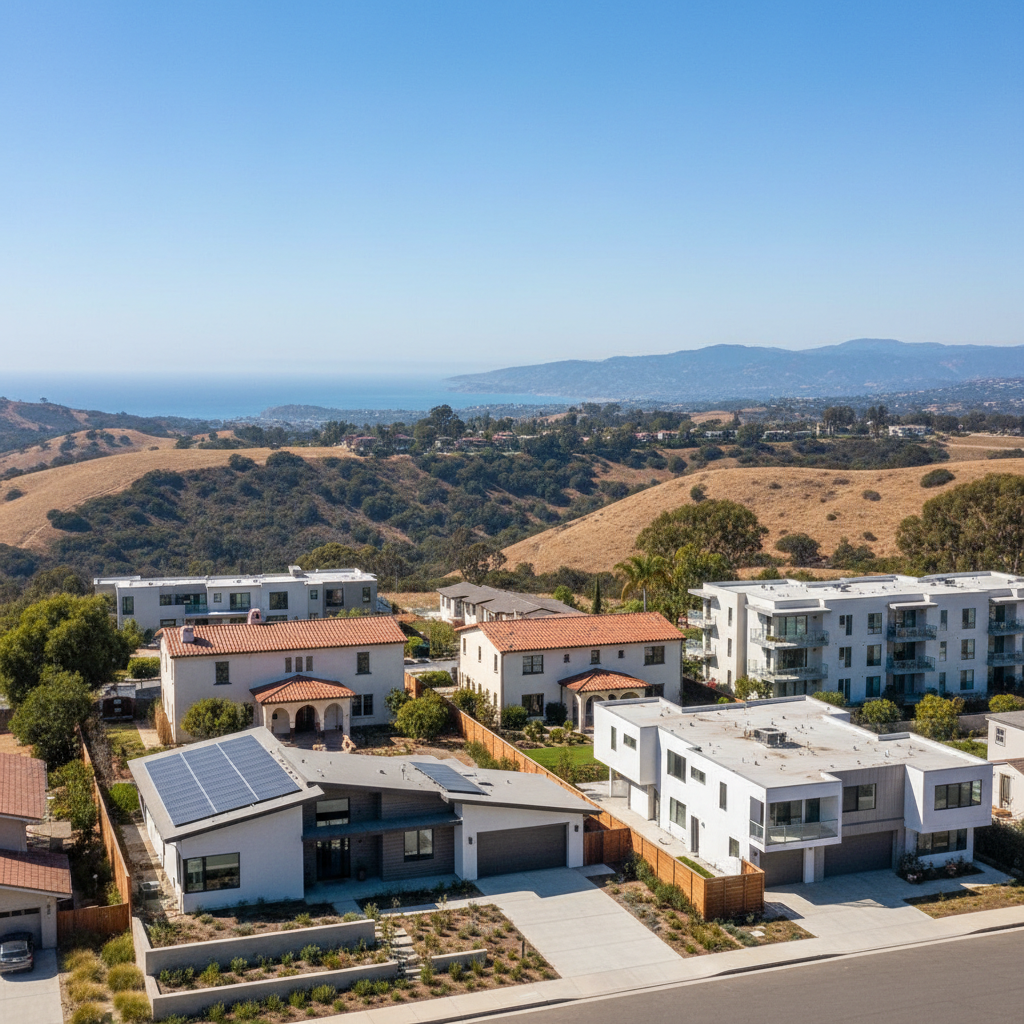
The 2026 Landscape: Beyond the Rate Shock
As of March 2026, the California real estate market has transitioned from the volatile recovery phase of 2024-2025 into a period of calculated stabilization. According to data from the California Association of Realtors (CAR), the median home price has settled at approximately $895,000, representing a sustainable 4.2% year-over-year growth. This normalization follows a period where the Federal Reserve stabilized interest rates around the 5.5% mark, providing the predictability that institutional investors and first-time buyers have craved for years.
The AI Corridor and Coastal Demand
The resurgence of the Silicon Valley and San Francisco markets—often termed the 'AI Corridor'—is a primary driver of coastal value. CBRE reports show a marked increase in commercial office absorption in South of Market (SoMa) and Palo Alto, which has directly correlated with a 6.8% rise in residential property values in surrounding zip codes. Investors are no longer looking at broad 'work-from-home' trends but are instead focusing on high-density tech hubs where physical proximity to compute clusters and venture capital remains a competitive necessity.
Inland Expansion and the Logistics Play
While coastal markets remain high-barrier, the Inland Empire and the Central Valley have evolved into primary growth engines. Census data indicates a steady 1.8% population migration from the coast to the interior, driven by the expansion of automated logistics centers and more affordable housing stock. In cities like Riverside and Stockton, the 'Build-to-Rent' (BTR) sector has seen a 12% increase in institutional capital allocation, as firms pivot to capture the demand for single-family lifestyles at rental price points.
Practical Takeaways for Market Participants
- For Investors: Focus on 'ADU 2.0' opportunities. Recent legislative updates in late 2025 have streamlined the process for separating Accessory Dwelling Units (ADUs) for sale as individual condos, unlocking significant equity in traditional single-family lots.
- For Buyers: Inventory remains 15% below the ten-year average. Pre-approval in the current rate environment is mandatory, but the lack of 'frenzy' allows for more robust due diligence and inspection contingencies that were frequently waived in the early 2020s.
- For Sellers: Presentation and energy efficiency are now the primary differentiators. With rising utility costs, homes featuring integrated solar-plus-storage systems are fetching a 3-5% premium over non-efficient comparable properties.
Conclusion
The California market in 2026 is defined by resilience and regional specialization. While the macro-economy faces headwinds from global trade shifts, the local demand for housing—underpinned by a persistent supply deficit and a robust tech economy—continues to offer compelling yields for those who prioritize long-term stability over short-term speculation.