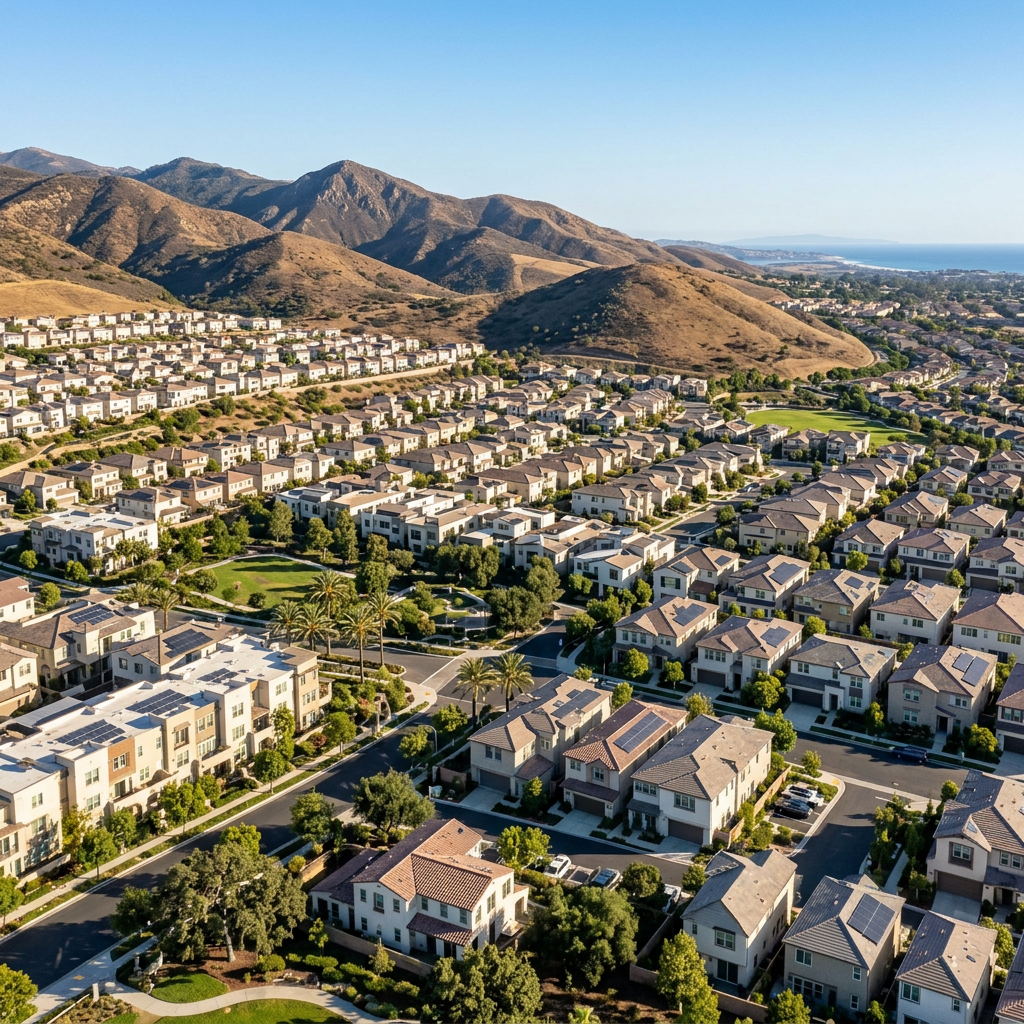
Navigating the 'New Normal' in the Golden State
As of March 2026, the California real estate market has transitioned from the volatility of the early 2020s into a period of cautious stabilization. After two years of adjusting to the structural changes in real estate commissions and a fluctuating interest rate environment, the market is now defined by a 'Locked-In' effect 2.0. While the frantic bidding wars of the post-pandemic era have subsided, the fundamental mismatch between supply and demand continues to dictate price floors across the state’s major metros.
Data-Driven Market Analysis
Recent data from the California Association of Realtors (CAR) indicates that the median home price in California has plateaued at approximately $845,000, a 3.2% increase year-over-year. However, transaction volume remains 12% below the ten-year historical average. This is largely attributed to the 'Golden Handcuffs'—homeowners who secured 3% mortgage rates in 2021 and remain hesitant to trade up into current 5.8%–6.2% market rates.
According to MLS data for Q1 2026, inventory levels in coastal hubs like San Diego and San Francisco are sitting at just 2.4 months of supply, well below the 6 months typically required for a balanced market. Conversely, the Inland Empire and Central Valley have seen a slight uptick in inventory due to a surge in new construction completions, offering a rare window of leverage for buyers in those regions.
Investment Perspectives: The Shift to Density
For investors, the 2026 landscape has shifted away from traditional single-family fix-and-flips toward 'Density-Driven' strategies. Legislation such as SB 9 and SB 10 has finally begun to see meaningful implementation at the municipal level. Investors are increasingly targeting older single-family lots for Accessory Dwelling Unit (ADU) expansion or conversion into multi-unit 'missing middle' housing.
Institutional investors, according to recent CBRE reports, are pivoting their California portfolios toward the 'Build-to-Rent' (BTR) sector. With homeownership out of reach for many, the demand for high-end, managed rental communities is at an all-time high, particularly in suburban pockets adjacent to tech and biotech hubs.
The Economic Headwinds: Insurance and Climate Risk
Perhaps the most significant trend in 2026 is the impact of the insurance crisis on property valuations. In fire-prone and coastal zones, the cost of the California FAIR Plan and remaining private carriers has become a critical factor in debt-to-income (DTI) calculations. Buyers are increasingly walking away from deals during the contingency period due to unfeasible insurance premiums, leading to a widening price gap between 'insurable' and 'high-risk' properties.
Practical Takeaways for Market Participants
- For Buyers: Focus on the 'Periphery of the Core.' With stabilized rates, the cost of waiting may outweigh the cost of borrowing. Seek properties with existing ADUs or lot splits to offset mortgage costs through rental income.
- For Sellers: Transparency is your greatest asset. In a market with high carrying costs, buyers are risk-averse. Pre-inspections and comprehensive insurance quotes provided upfront can prevent deal fallout.
- For Investors: Track SB 4 (the 'Yes in God's Backyard' law) for opportunities involving surplus land held by religious and educational institutions, which are now being fast-tracked for affordable housing development.
While California remains a high-barrier market, the 2026 data suggests that the era of runaway appreciation has been replaced by a more sustainable, if inventory-constrained, growth trajectory. Success in this environment requires a granular understanding of local zoning and a sharp eye on the total cost of ownership beyond the sticker price.


