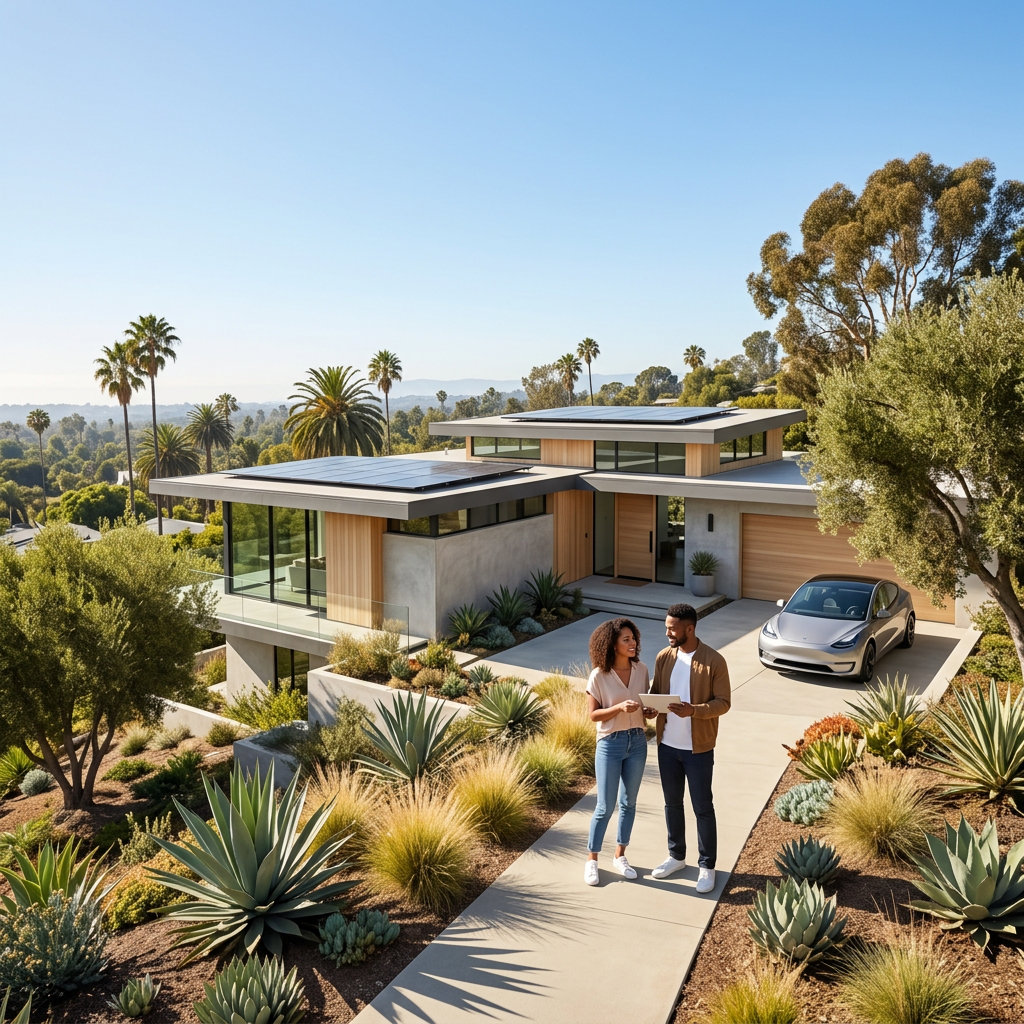
The 2026 California Landscape: A Market of Managed Scarcity
As of March 16, 2026, the California housing market remains a complex ecosystem defined by high entry costs and evolving regulatory hurdles. According to recent data from the California Association of Realtors (CAR), the state’s median home price has stabilized at approximately $895,000, a 4.2% year-over-year increase. While the 'lock-in effect' of 2023-2024 has partially thawed as mortgage rates settled into a 'new normal' range of 5.8% to 6.2%, inventory remains 22% below pre-pandemic levels.
For buyers entering this market, success is no longer just about the highest bid. It is about navigating the 'Insurance-Inventory Paradox' and understanding the long-term implications of density-focused legislation.
1. The Insurance Crisis: Your First Due Diligence Step
In 2026, the most significant barrier to closing a deal in California isn't the down payment—it's the insurance binder. With major carriers like State Farm and Allstate having restricted new policies in high-fire-risk zones, buyers must investigate insurability *before* submitting an offer.
- The Actionable Step: Request a Comprehensive Loss Underwriting Exchange (CLUE) report and a quote from the California FAIR Plan during your 17-day investigation period. If a property is in a Very High Fire Hazard Severity Zone (VHFHSZ), expect premiums to be 3x to 5x higher than urban equivalents.
- Data Point: As of Q1 2026, nearly 15% of California transactions involve a FAIR Plan policy, up from just 4% in 2019.
2. Post-Settlement Commission Dynamics
Following the landmark NAR settlement impacts that became standard practice by 2025, California buyers must now sign a Buyer Representation Agreement before touring homes. This document clearly outlines the buyer's broker compensation. Sellers are no longer required to offer a set commission on the MLS.
- Strategy: Budget for the possibility of paying your agent’s commission out of pocket, or structure your offer to include a 'seller concession' to cover these costs. In a competitive seller's market, asking for a 2.5% concession can make your offer less attractive than a 'clean' bid.
3. Maximizing Value through SB 9 and ADU Laws
With the California Department of Finance projecting continued population shifts toward inland hubs, smart buyers are looking at properties with 'density potential.' Laws like Senate Bill 9 (SB 9) allow many single-family lots to be split or developed with up to four units.
- The Investment Angle: Look for lots larger than 5,000 square feet with favorable setbacks. Building an Accessory Dwelling Unit (ADU) in 2026 typically costs between $250 and $400 per square foot in California but can increase property value by up to 30% in coastal markets.
4. Environmental and Tax Disclosures: Beyond the Basics
California’s Natural Hazard Disclosure (NHD) report is your most critical document. Beyond wildfire, pay close attention to Liquefaction Zones and Mello-Roos districts. Mello-Roos are special tax assessments used to fund local infrastructure; they can add $2,000 to $5,000 to your annual tax bill, significantly impacting your debt-to-income (DTI) ratio.
Practical Takeaways for 2026 Buyers:
- Get a 'TBD' Underwriting: Don't just get pre-approved. Have your file fully underwritten by a lender before you find a house. In 2026, a 10-day closing is often the only way to beat all-cash institutional investors.
- The 72-Hour Rule: In high-demand areas like the Inland Empire, Sacramento, and San Diego, 65% of homes go into escrow within 72 hours of listing. Have your proof of funds and deposit ready.
- Energy Audits: With California's Title 24 energy standards becoming stricter, check if the home has solar (owned or leased) and its electrification status. Transitioning a gas-heavy home to electric can be a hidden $20,000+ expense.


